
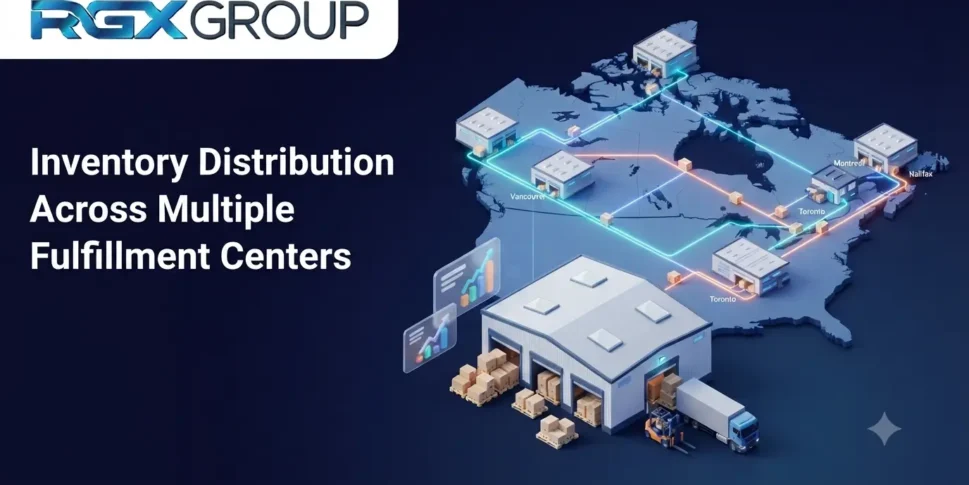
When managing an increasing number of products, how the seller stores their stock can affect how quickly they can deliver items to customers, plan for future inventory levels, and the cost of fulfilling each order. Amazon distributes its FBA stock in its network according to how demand and operational factors influence its placement—making stock placement key ingredient of the fulfillment process.
How Amazon FBA Inventory Placement Works
Amazon inventory placement refers to distributing products across different fulfillment centers so inventory can be positioned closer to customers. Amazon describes placement as the distribution of inventory across multiple fulfillment centers to help meet customer demand.
For sellers, this means inventory does not necessarily remain at one Amazon fulfillment center warehouse after being shipped into the network. Amazon’s fulfillment system may move or distribute units according to its network requirements.
Understanding Fulfillment Center Distribution
The Amazon network includes numerous Amazon FBA warehouse locations, allowing inventory to be positioned across different regions. This geographic distribution can support faster delivery while reducing the distance products need to travel to customers.
The specific destination of an inbound shipment can vary, so sellers should account for placement when planning freight, replenishment schedules, and inventory availability.
Amazon also offers an overview of FBA fulfillment and inventory management, including information about its fulfillment network and tools available to sellers.
What Is an Inventory Placement Service?
An Amazon inventory placement service can simplify how sellers send inventory into the network. Depending on eligibility and current Amazon programs, sellers may have options for sending inventory to fewer locations while Amazon manages distribution across its fulfillment network.
This can be useful for businesses that want greater control over inbound logistics without manually determining which fulfillment centers should receive every unit.
Planning Inventory Across Multiple Locations
Effective inventory planning goes beyond knowing the location of each unit. Sellers should monitor sales velocity, regional demand, replenishment timing, and available capacity.
Businesses selling in Canada may also need to account for the requirements and network structure associated with an Amazon Canada fulfillment center. The same principle applies across marketplaces: inventory decisions should reflect where customers are located and how quickly products need to reach them.
For larger catalogs, reviewing these factors regularly can make Amazon fulfillment services easier to manage. RGX Group can support sellers looking to improve their inventory and fulfillment processes as their Amazon operations expand.

