
Keytakeways
- Amazon multi channel fulfillment allows brands to use one fulfilment network for orders placed across multiple ecommerce channels.
- Amazon MCF can connect inventory with direct-to-consumer websites, marketplaces and social commerce channels.
- A shared inventory pool can reduce operational complexity compared with managing separate stock for every channel.
- Omnichannel brands need to think beyond delivery speed; inventory visibility, packaging, tracking and consistency all influence the customer experience.
- Amazon MCF is available in Canada, alongside several other markets, although availability, fees and requirements vary by location.
- Amazon MCF pricing should be assessed against order profile, product size, delivery speed, storage needs and the cost of managing fulfilment independently.
Customers rarely think about which warehouse ships their order. They simply expect the experience to work.
They might see an item on Instagram, buy it on a brand’s website and then go back to Amazon to check for availability. This represents a fulfilment challenge for omnichannel brands, as they can see one brand, but be behind the scenes with multiple channels.
That is where Amazon MCF can become part of the infrastructure.
What Changes When One Inventory Pool Serves Multiple Channels?
Traditional multichannel operations can leave brands managing separate inventory allocations for Amazon, their own ecommerce site and other marketplaces. This can create unnecessary complexity and increase the risk of stock being available in one channel while unavailable in another.
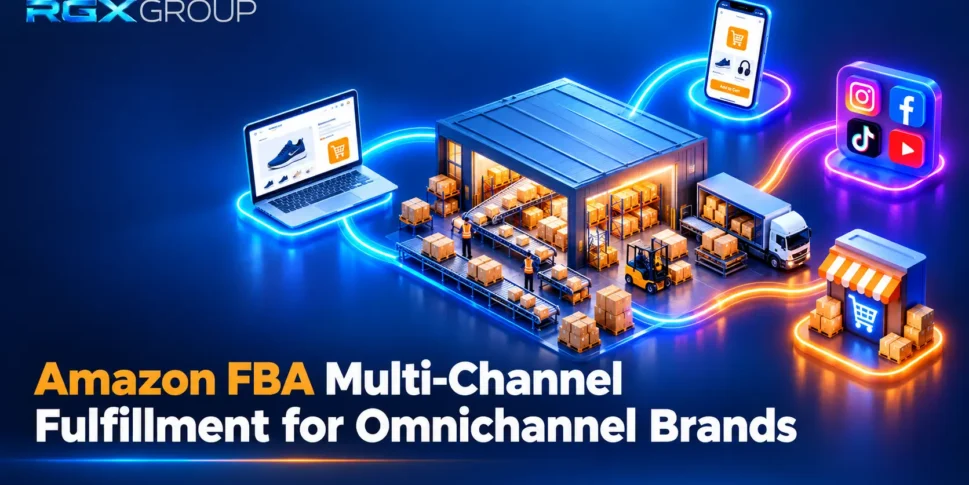
Amazon Multichannel Fulfillment uses a shared pool of inventory to fulfil orders from multiple sales channels. Amazon describes MCF as a 3PL service that stores, picks, packs and ships orders placed outside Amazon, including through DTC websites, marketplaces and social platforms.
The operational difference is significant.
Instead of asking, “How much inventory should we hold for each channel?”, brands can plan inventory around total demand while maintaining appropriate safety stock.
FBA and MCF Are Not the Same Thing
The terms are easy to confuse.
FBA primarily fulfils orders placed through the Amazon store. MCF extends fulfilment to orders originating from other connected sales channels. A brand can use FBA, MCF or both, depending on its operating model.
For an Amazon seller, this means existing FBA inventory may also support orders coming from a brand website or another ecommerce channel through MCF.
Where the Omnichannel Experience Can Break Down
Suppose a customer reads on a product page that it will arrive in two days but it takes much longer for the actual delivery. Or a customer orders something which is not the same packaging, has not got enough tracking data or gets something which is not as expected.
The brand, rather than the fulfilment provider, is what the customer remembers.
MCF supports integrations with ecommerce platforms and provides tracking for fulfilled orders. Amazon also offers unbranded packaging by default for MCF orders, which can help brands maintain a more neutral post-purchase experience.
Still, technology cannot compensate for poor inventory planning or inaccurate delivery promises.
Why Canada Deserves Separate Consideration
Brands selling across North America should not automatically assume that US fulfilment economics translate directly into Canada.
Amazon MCF Canada is part of Amazon’s international MCF network, yet businesses must assess the local fulfilment needs, product eligibility, delivery expectations, inventory positioning and applicable fees. As of this writing, Amazon has Canada on its list of countries that sell MCF.
In the case of a growing brand, it’s not just a matter of if MCF works in Canada, but whether it does. Its whether or not the service matches the company’s order volume for Canada and its distribution system.
The Economics Behind the Decision
Amazon MCF pricing needs to be considered at the order level rather than judged from a single fulfilment fee.
Product dimensions, weight, units per order and delivery speed can all affect fulfilment costs. Amazon’s 2026 US rate card, for example, uses different rates according to size tier and the number of units in an order.
Brands should compare those costs with the full alternative: warehouse space, labour, packaging materials, carrier contracts, software, returns handling and the management time required to operate their own fulfilment process.
Sometimes the cheapest-looking option is not the least expensive operationally.
Build the Fulfilment Layer Around the Customer Journey
The strongest best omnichannel experiences tend to feel consistent even when purchases happen through different channels.
That requires more than fast shipping. Inventory should be accurate, delivery promises should be realistic, tracking should be visible and fulfilment processes should not create unnecessary differences between channels.
This is where multichannel fulfillment becomes strategically important. It can provide the physical infrastructure behind an omnichannel brand experience, while the brand retains control over pricing, merchandising, customer communications and the wider relationship.
For current information on Amazon MCF availability, fulfilment options and pricing, businesses can refer to Amazon’s Multi-Channel Fulfillment page for Canada.
When Does MCF Make Sense?
There is no universal answer.
MCF can often be of interest when a brand sells products via multiple channels but does not wish to maintain multiple fulfilment systems for them. It can also be advantageous in the event that order volume is increasing faster than in-house warehouse capacity.
But before switching the fulfilment model, businesses should consider product characteristics, margins, geographic demand, order density, and inventory turnover.
It is not their aim to send all orders to Amazon. Its goal is to create a fulfilment system to match customer purchasing behaviours.
For many omnichannel brands, that may mean combining FBA for Amazon orders with multichannel fulfillment Amazon capabilities for DTC, marketplace and social-commerce orders.
RGX Group provides warehousing, e-commerce fulfilment, pick-and-pack and FBA prep services across Toronto, Mississauga and Brampton. For brands selling through multiple channels, a local fulfilment partner can provide additional support around inventory handling and distribution while the business evaluates which orders and products should flow through Amazon MCF.
FAQs:
Q. Is FBA still profitable in 2026?
Ans: FBA can remain commercially viable, but profitability depends on product margins, fulfilment fees, storage, advertising, returns, selling fees and inventory efficiency. There is no single profitability figure that applies to every seller.
Q. What is Amazon’s Multi-Channel Fulfillment?
Amazon Multi-Channel Fulfillment is a 3PL service that uses Amazon’s fulfilment network to pick, pack and ship orders placed through channels outside Amazon, including brand websites, marketplaces and social commerce.
Q. What are the biggest FBA mistakes to avoid?
Common issues include inaccurate inventory forecasting, ignoring the full fee structure, over-ordering stock, overlooking returns and failing to monitor product-level profitability. Sellers should assess total landed and fulfilment costs rather than focusing on revenue alone.
Q. How many Amazon sellers make over $100k?
There is no single current figure that reliably represents all Amazon sellers worldwide. Published estimates vary depending on whether they measure annual sales, profit, individual sellers or businesses, so the figures should not be treated as a universal benchmark.
Q. Can Amazon MCF fulfil orders outside Amazon?
Yes. MCF is specifically designed to fulfil orders from off-Amazon channels, including DTC websites, ecommerce marketplaces and social platforms.

